
What is the difference between a muffler and a resonator?
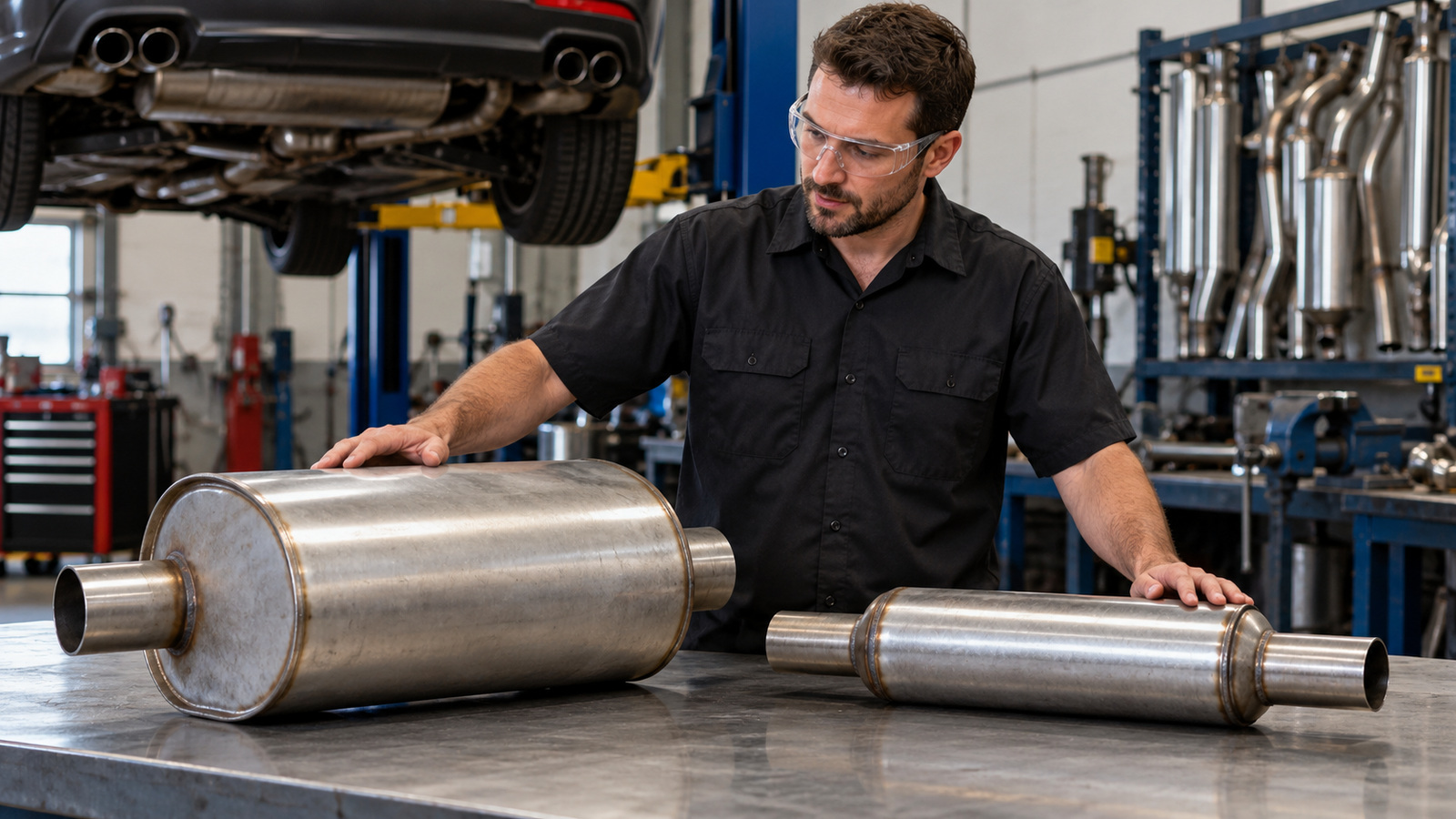
A muffler and a resonator are both sound control parts of an exhaust. A muffler is built to bring the overall noise level down. A resonator is shaped to work on particular frequencies, meaning the pitches that make up a sound. The two roles overlap, so the neat rule that one handles volume and the other handles tone does not hold. A box that looks like a muffler is no proof of what sits inside it.
Under a car the two can look much alike: a metal casing with pipe connections. The name on a parts list does not settle which is which, nor does the shape.
What does each part do?
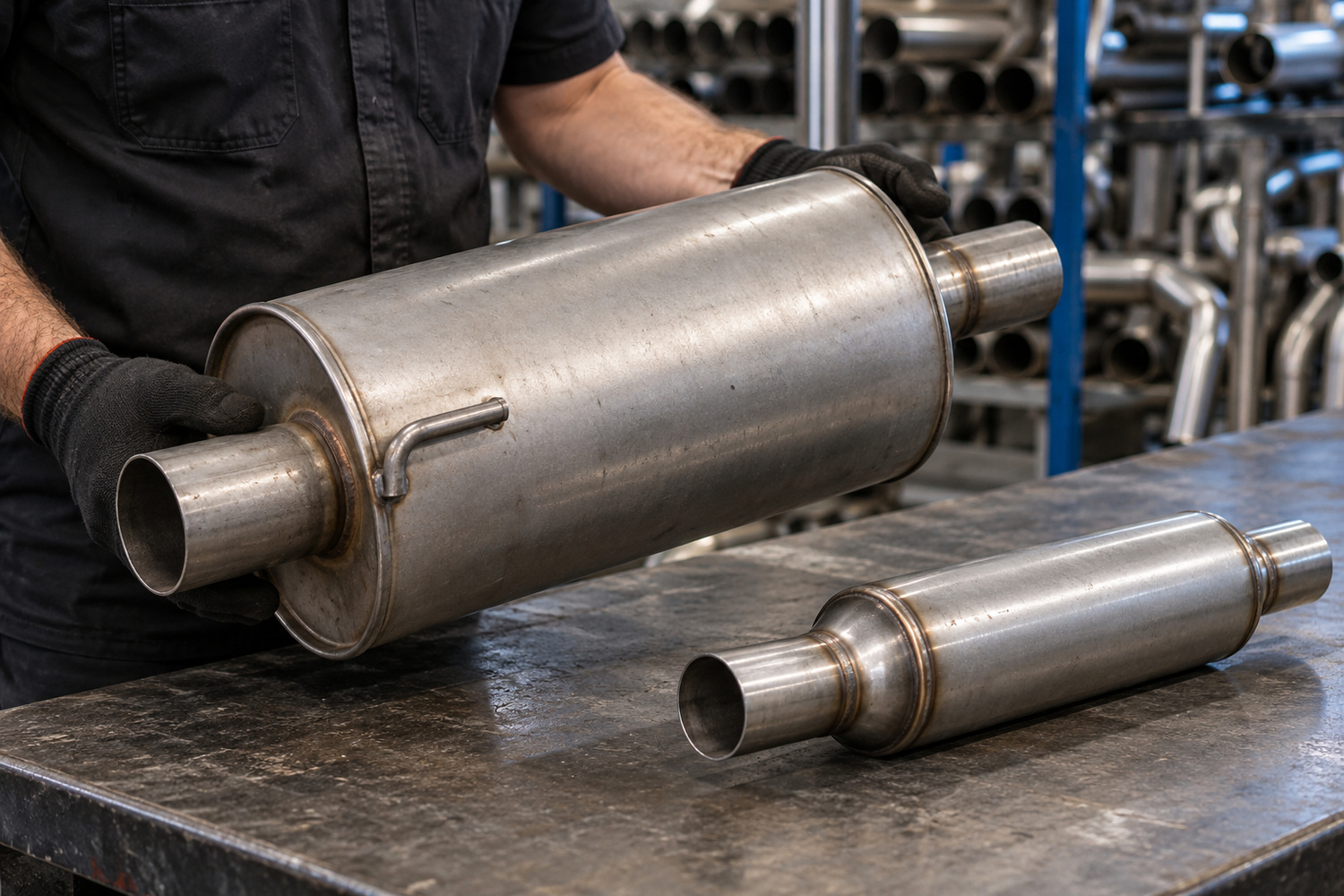
A muffler is the part of an exhaust designed to reduce the noise an engine makes on its way out. It does not do that work alone. An Australian motor-vehicle noise standard treats silencing as a whole system. It defines a vehicle’s noise reduction system as the complete set of parts needed to limit the noise the vehicle and its exhaust make. Among those parts it names the pipework, an expansion chamber and the silencer itself.
A resonator is a chamber or a side branch tuned to particular frequencies. Engineering studies describe such designs as cutting sound energy at their own resonant frequency. That is a narrower target than overall loudness, which is where the volume against tone shorthand comes from.
The shorthand is still too neat. Some silencer designs work by reflecting sound back towards its source rather than absorbing it. Reflection is used in resonator chambers and in expansion chambers inside mufflers, so two parts can share a mechanism and still be tuned to do different work.
Why might an exhaust use both?

Where both are fitted, they cover different parts of one sound problem. Technical work on silencers sorts them into reflective designs, absorbent designs, and either of those combined with a resonator. A system can carry a muffler that brings the level down and a resonator that deals with a frequency left behind.
Not every car has a separate resonator. Resonance features can be incorporated into a muffler rather than provided by a separate box. The number of boxes under a car is not a measure of how well it is silenced. The arrangement depends on the particular vehicle and exhaust design.
Can the shapes tell you which is which?
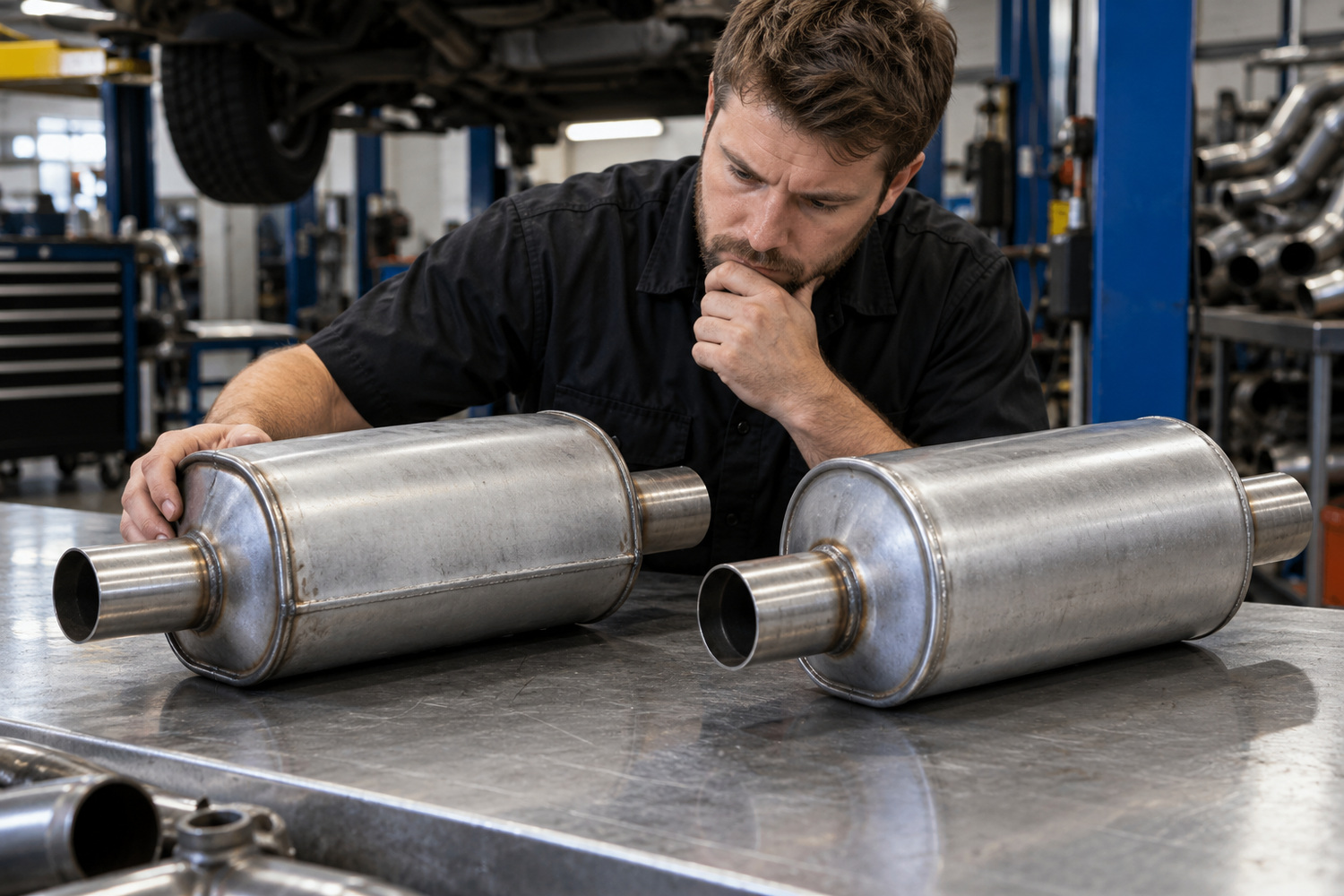
Looks and names are weak evidence. What decides how a part behaves is the layout inside it, and those layouts vary.
Two boxes of the same shape can hold different designs. Neither a matching outer shape nor the name alone establishes that one part is a suitable replacement for another. The intended function and the complete system still need to be considered.
- Some work mainly by reflecting sound, using chambers and changes in pipe diameter.
- Some work mainly by soaking it up, with sound absorbing packing inside the outer shell.
- Some combine reflection and absorption, rather than relying on only one method.
Is sound control the same as emissions control?
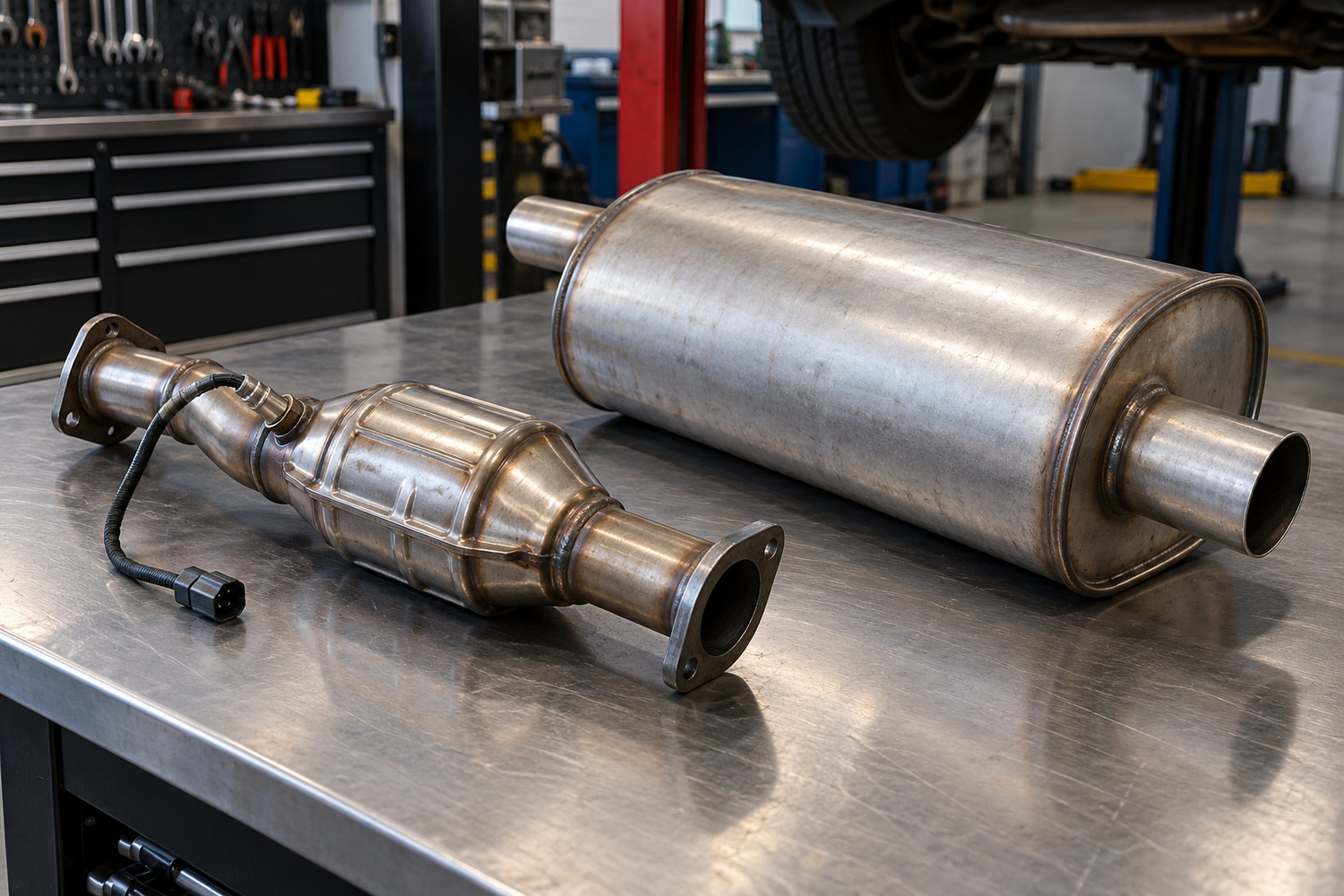
No. Reducing sound and controlling pollutants are different functions. Australian vehicle standards address both. The noise standard defines a complete noise reduction system. A light-vehicle emissions standard separately defines pollution control devices as components that control or limit exhaust and evaporative emissions. Which requirements apply to a particular vehicle depends on the vehicle and the applicable rules.
A muffler or resonator label therefore does not establish that a component controls pollutants. Sound attenuation cannot stand in for required pollutant control. Nor can the outside of a housing tell you all the functions an assembly contains. Keep the two purposes distinct when discussing a component.
A discussion of sound alone cannot establish whether an emissions-equipment change is acceptable. EPA Victoria states that it cannot approve changes to a vehicle exhaust, such as diesel particulate filters. It sends those enquiries to VicRoads. Whether a changed exhaust still has to be legal in Victoria is covered in a separate article.
Does a different sound identify a failed part?

A change in sound does not identify a failed component. Knowing the normal purpose of a muffler or resonator cannot establish what has gone wrong on one car.
The name of a part is not a diagnosis either. A new noise, or a change in the note, can come from more than one point along the system. A muffler enquiry is worth treating as an enquiry about the whole exhaust, because the source has to be assessed rather than assumed.
No article can establish whether a car is safe to keep driving. If that is the worry, put it to a workshop before driving further.
Why does the complete vehicle system matter?

The surrounding system can affect a sound control part’s behaviour. Research on muffler design notes that the tailpipe, the last length of pipe before the outlet, acts as a resonant cavity coupled to the muffler. The same work notes that a muffler’s noise reduction changes if it does not get the pipe it was designed around. That research used an acoustic test rig, not a comparison of replacement parts on modern passenger cars. It supports the system principle, not a promised result for a particular vehicle.
A visual match is therefore thin evidence of acoustic performance. The noise standard uses defined test methods; an impression of the sound cannot establish a vehicle’s compliance. A description of how a component works is also not a prediction of how loud a changed system will be.
Treat the exhaust as one system, and a part swap as a change to it. Exhaust repair and replacement enquiries start with the vehicle and the system on it, not with a part number.
Call Taylah Made Exhausts in Melton on (03) 9747 8080. Have the make, model and year ready, say what has changed about the sound, and mention any exhaust work already on the car.